Catalogue / Guides / Leaflet 30
Is it on the FSA list? Checking a product before you buy
A two-minute check on the FSA's public list: where to search, what each status means, and why name, dose and pack size all have to match. Real examples, checked on 19 November 2026.
Ad This guide links to products sold by UK shops. We earn a commission on sales made through these links.
What the FSA list is for
In England and Wales, CBD in food is a novel food, and no CBD extract or isolate has been authorised as one. The FSA's answer to the gap is a public list. It holds the products on sale before 13 February 2020 whose makers applied for authorisation before 31 March 2021 and whose applications the FSA has validated or agreed are progressing well. Products marked Validated or Awaiting evidence may stay on the market, pending further consideration. Products that are not on the list, or are marked Removed, must be withdrawn.
That is what the list is. It is a register of products tolerated while a decision is pending, built from information the applicants supplied. It is not a stamp of quality, and checking it is the single most useful thing you can do before you buy a CBD food product. I check invoices against delivery notes for a living, and this is the same job: does the thing in front of me match a line on the record? Most of the time the answer takes two minutes.
Every product in this catalogue that is food carries its cbdid number and the date we checked it. This guide shows you how to do that check yourself, on any product, from any shop. Dates are 19 November 2026 unless I say otherwise.
How to search the list
The list is at data.food.gov.uk/cbd-products/products-list. The FSA's guidance notes say the register supports a free-text search of entries, a filter by status, and sorting by product name and by manufacturer or supplier. You can also download it as CSV or Excel, and the open data file is at data.food.gov.uk/cbd-products/id/listing.csv. Here is how I go about it.
- Copy the exact details from the shop's page. The product name, the mg, the size or pack count, and the flavour if there is one. Write them down before you search.
- Search on the brand and one distinctive word. "Herbal Health 5%" works better than a whole product title. The entry may spell the name differently from the shop, so start short and narrow down.
- Try the supplier name as well. The list names the manufacturer or supplier, which is not always the brand on the bottle. Dr Watson's entries, for one, give the maker alongside the brand.
- Open the entry and read every field. Name, size, remarks, application number and status. The next section goes through them.
- Compare, field against field. Name, mg, pack size, flavour. If one differs, it is a different product as far as the list goes.
- Write down the cbdid and the status, and look again after the list is next updated.
The page that displays the list shows ten entries at a time, with a choice of 25 or 50. For a brand with dozens of entries, the CSV in a spreadsheet is faster: filter the name column, then read the size column. The register held 12,115 entries on 19 November 2026, last updated on 13 April 2026.
If you cannot find a product, do not assume. Try the brand on its own, then the supplier, then the mg. Look at the product's name as it appears on the pack, not on the shop banner, because the two sometimes differ. If you still find nothing, ask the shop which cbdid its product carries. A shop that sells a listed product can usually say. If it cannot, you have learnt something, and the sensible reading is that the product is not on the list.
Reading an entry, field by field
The FSA's guidance notes explain what each field is, and the open data file carries them all. These are the ones that settle the question.
- Product name: the name on the label displayed on the product. It should match the bottle or pack in your hand.
- Reference code (cbdid): the unique code, such as cbdid6347. This is the one to keep.
- Application number: the RP number that links the entry to an application. Several brands share one.
- Manufacturer or supplier: who put the product forward, which is not always the brand or the shop.
- Product size, volume, quantity: a breakdown of how the product is marketed, including all current size, volume and pack quantity information. This is where the 10 ml, the 30 pack and the 25 mg live.
- Remarks: anything else that helps identify the product. Often the maker's label text.
- Status and last updated: Validated, Awaiting evidence or Removed, and the date the entry last changed.
The last updated field belongs to the entry, not to the whole register. It is the date the entry last changed: a new product added, details changed at the applicant's request, or a change of status. So cbdid6347 for the Dr Watson gummies reads 31 May 2023 and the H Drop oils read 17 December 2025, while the register itself reads 13 April 2026. An old date on an entry does not mean it has lapsed, and a recent one means something about it moved, so look at the status again.
The remarks field is worth a look. Several entries quote the maker's label, including serving advice. Where that quoted text gives a daily figure different from the FSA's consumer page, it is the applicant's text, and the consumer page is the one to follow. That page says healthy adults should limit CBD from food to 10 mg a day.
Validated, Awaiting evidence, Removed
The list has three statuses. Here is how many entries held each on 19 November 2026, counted from the open data file, with the FSA's wording.
| Status | Entries on 19 November 2026 | Share | What the FSA says it means | Where that leaves a shopper |
|---|---|---|---|---|
| Validated | 10,374 | 85.6% | The application holds all the information the law requires and goes on to risk assessment. Not an authorisation. | May stay on the market in England and Wales pending further consideration. |
| Awaiting evidence | 702 | 5.8% | Not yet validated, but progressing well, with studies planned and an agreed deadline. | Same: may stay on the market pending further consideration. |
| Removed | 1,039 | 8.6% | The application did not make enough progress in the agreed time. | Must be withdrawn from the market. We do not list one. |
About one entry in twelve is Removed, so a brand that is on the list is not the same as a product that still is. A Removed entry is the one case where the answer is simple. For Awaiting evidence the FSA's own wording is that the application is progressing well, and the FSA treats it like Validated for the purposes of what may stay on the market. A bit of caution about the label: neither status is an authorisation. The FSA says on its register that it is not endorsing the sale of any CBD food product, whether on the list or not.
Every one of the 34 food products in this catalogue is listed as Validated. None is Awaiting evidence or Removed. If that changes on the next update, the card changes and the product goes.
Name, dose, pack size: real checks from this catalogue
The same brand can have an entry for one pack and none for the next. These are checks I made when building the catalogue, and what they came to.
| Check | What the shop sells | What the list holds | What we did |
|---|---|---|---|
| Name and pack | Dr Watson gummies, 12 pack, 25 mg | cbdid6347 (Validated, 12 pack, 25 mg gummies, 300 mg a pack) and cbdid12086 (Awaiting evidence, a passion peach flavour 12 pack) | Listed the pack that matches cbdid6347 |
| Pack size | CBD Guru soft gel capsules, 25 mg, pack of 60 | cbdid6675 is a 30 pack of 25 mg capsules, and we found no 60 pack | Left it out |
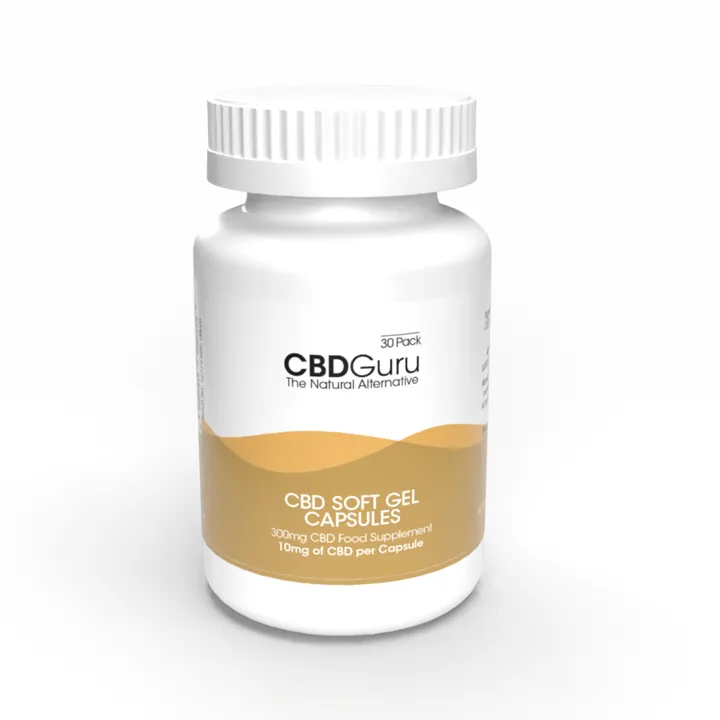
| Pack size | CBD Guru soft gel capsules, 10 mg, pack of 30 | cbdid6674, a 30 pack of 10 mg capsules | Listed |
| Flavour | Herbal Health 5% oil in natural, citrus, fresh mint and strawberry | cbdid5802 natural, cbdid5803 citrus, cbdid5804 fresh mint; none for strawberry | Listed the three, left strawberry out |
| Size | CBD Armour 3,000 mg tincture in 10 ml and in 30 ml | cbdid662 for 10 ml and cbdid663 for 30 ml | Listed each size against its own entry |
The Dr Watson row shows two entries for one pack. The Validated entry, cbdid6347, calls it a 12 pack of 25 mg gummies at 300 mg a pack. The Awaiting evidence entry, cbdid12086, is a newer one for a 12 pack in a passion peach flavour, with a different maker text and a different application number. Both carry the same barcode in the product ID field, so the barcode alone does not tell the entries apart. Both statuses are tolerated. The pack we show matches the Validated one.
The CBD Guru row is the plainest case of pack size. The brand's capsules are listed, but the 25 mg version is listed in a pack of 30 and the shop sells a pack of 60. The entry names the pack, so a different pack count is not the entry. We left it out, and we kept the 10 mg capsules, whose 30 pack matches.
No. 30·01CBD Guru
CBD Guru soft gel capsules, 30 x 10mg (300mg)
30 capsules · 300mg CBD in all · 10mg per capsule
£39.9913p per mg
Buy at CBD GuruFlavour and size can also split an entry. Herbal Health's 5% oil has three entries, one each for natural, citrus and fresh mint, and the strawberry flavour on the shop has none. CBD Armour has an entry for each size of its 3,000 mg tincture. Even punctuation can differ: the 30 ml entry spells the brand and product as one word. Match the words, the mg and the size, and do not worry about a missing space.
One more habit, borrowed from bookkeeping: do not trust a match on the product ID alone. The two Dr Watson entries share a barcode, as the example shows, and the CBD Armour entries use batch codes in that field. The product ID is a clue. The name, the size and the mg are the evidence.
The last check is the dose. A gummy that holds 25 mg is a product with its own entry, and so is a 10 mg one. If the label of the pack in your hand says 20 mg and the nearest entry says 10 mg, they are two products. The gummy guide on this site shows a case where the shop's page and the FSA entry disagree on the piece count for the same pack.
What the list is not
- Not an authorisation. No CBD food product is authorised yet. Validated means the application is complete enough to be assessed. The FSA says products on the list are not formally authorised.
- Not an endorsement or a safety check. The register's disclaimer says the information was provided by applicants and the FSA cannot be held responsible for errors or omissions.
- Not a guide to dose. The only figure the FSA gives consumers is 10 mg a day for healthy adults, and it advises against CBD for under 18s, people taking medication, and anyone pregnant, breastfeeding or trying to conceive.
- Not UK-wide. It applies to England and Wales. Scotland falls under Food Standards Scotland, and Northern Ireland has its own FSA guidance.
- Not a list of shops. It names the maker or supplier. It says nothing about the shop that sells the bottle to you, and a shop can sell a pack that has no entry.
- Not a list of everything. It covers food. A cream, a balm or a bath bomb is a cosmetic, so its absence from the list means nothing either way.
Where the applications stand
The list is a waiting room, and the question people ask is when the doors open. The state of play on 18 November 2026, when we last read the FSA and government pages, is this. In September 2026 the FSA's board looked at three applications for high-purity CBD, RP 7, RP 350 and RP 427, and recommended that the FSA advise ministers in England and Wales to authorise them. The FSA's own paper says the final decision rests with ministers. We found no ministerial decision published and no authorisation text on legislation.gov.uk.
Two further facts from the paper. About 3,000 products on the list are linked to those three applications. And ten other CBD applications are at the risk management stage. The open data file shows which application each entry belongs to. Of the 34 food products here, 26 are linked to RP-427, one of the three. The other eight, from H Drop, CBD Armour and Dr Watson, belong to other applications, which the September paper does not cover. That says nothing about quality or safety. It says where each file sits.
The list has not moved either: the date on it was 13 April 2026 when we checked on 19 November 2026, more than seven months earlier. The FSA says it updates the list regularly. Until it does, and until ministers decide, the rule for a shopper is the same: find the entry, match it, note the date. No CBD food product is authorised yet.
Before you click buy
- Copy the name, the mg, the size or pack count and the flavour from the shop's page.
- Search the FSA list for the brand and a distinctive word, and try the supplier too.
- Find the entry that matches on all four. If none does, treat the product as not on the list.
- Read its status. Validated and Awaiting evidence are tolerated for now. Removed is not.
- Keep the cbdid and today's date.
Questions people ask
How do I check if a CBD product is on the FSA list?
Open the FSA's public list of CBD products, search by brand and a distinctive word, and read the entry. Match its name, mg, pack size and flavour to the shop's page, then note the status and the cbdid reference. You can also download the list as a CSV file and filter it in a spreadsheet. The register was last updated on 13 April 2026.
What does Validated mean on the FSA list?
It means the application holds all the information the law requires and goes on to risk assessment. It is not an authorisation, and the FSA says it is not endorsing the products on the list. Validated and Awaiting evidence products may stay on the market in England and Wales pending further consideration, which is a temporary position.
What does Awaiting evidence mean, and is it safe to buy?
It means the application is not yet validated but is progressing well, with studies planned and an agreed deadline. The FSA says such products may stay on the market pending further consideration, as Validated ones may. The FSA does not say anything about safety there, and neither status is an authorisation. Our catalogue lists Validated products only.
What if a CBD product is not on the list or is marked Removed?
The FSA says products that do not appear on the list, or are marked Removed, must be withdrawn from the market. About one entry in twelve is Removed: 1,039 of 12,115 on 19 November 2026. We do not list products without a matching Validated or Awaiting evidence entry, and we do not suggest buying one.
Does the FSA list apply in Scotland and Northern Ireland?
No. It applies to England and Wales only. Novel food rules in Scotland are covered by Food Standards Scotland, and the FSA has separate CBD guidance for Northern Ireland. If you live in either, check those sources, because a listing on this register does not carry over.
Why can a brand be on the list while one of its products is not?
Each entry covers a named product in a stated size, dose and flavour. CBD Guru's 25 mg capsules are listed as a pack of 30, so a pack of 60 does not match, and Herbal Health's 5% oil has entries for three flavours but not strawberry. The name, mg, pack size and flavour all have to match.
Does being on the FSA list mean the FSA has authorised a CBD product?
No. The FSA says products on the list are not formally authorised, that it is not endorsing them, and that the information comes from applicants. No CBD food product is authorised yet. In September 2026 the FSA recommended three applications to ministers, and we found no decision published when we last looked on 18 November 2026.
Does the FSA list cover CBD creams and balms?
No. The list covers CBD food products. Creams, balms and bath bombs are cosmetics, which follow separate rules, so a cosmetic missing from the list tells you nothing either way. For skincare, read the ingredients list on the pack and the shop's page instead.
Where the facts come from
- FSA public list of CBD products
- FSA CBD products list: guidance notes on the statuses and fields
- FSA CBD products register: landing page
- FSA CBD products register: open data listing (CSV)
- FSA, Cannabidiol (CBD) consumer advice
- FSA, Cannabidiol (CBD) guidance for businesses
- FSA board paper, September 2026: recommendations to ministers on first CBD authorisations
- FSA, consultation on three CBD food products as novel foods